My grandmother used to say that in Naples, the street is the kitchen. She meant it literally. She grew up in the Quartieri Spagnoli, where women would lower baskets from fourth-floor windows to buy fried food from vendors below. The basket went down with coins, came back up with a cuoppo wrapped in brown paper. No plate, no fork, no sitting down. You ate standing, or walking, or leaning against a wall with one hand on your espresso and the other holding something fried.
I moved to Rione Sanità three years ago, and the street food thing hasn't changed much since my nonna's day. The baskets are mostly gone, sure. But the rest of it — the frying, the standing, the eating with your hands while dodging a Vespa — that's still very much alive. So here's a walk I've done probably fifty times, starting from Piazza Dante and winding through the centro storico, eating as you go. Budget maybe €12-15 for the whole thing. You'll be stuffed by the end.
What's Ahead
Start at Port'Alba — Where the Books Meet the Fryers
Piazza Dante is where the metro spits you out, and it's a reasonable place to get your bearings. The square is large and noisy and ringed with bookshops and cafés. Face the semicircular colonnade — the Convitto Nazionale — and look for the archway on the left side. That's Port'Alba, one of the oldest gates into the old city, and also one of the oldest book streets in Europe. The stalls have been selling used books here since the 1600s.
But you're not here for Dante's Inferno. You're here because halfway down Port'Alba, between stacks of secondhand paperbacks, you'll catch the smell. Oil. Dough. Something frying.
This is where you get your first pizza a portafoglio — a full margherita, folded in quarters like a wallet (portafoglio), wrapped in a sheet of wax paper, and handed to you for €1 to €1.50. One-fifty. For a real pizza, made with real dough that's been rising since morning, with San Marzano tomatoes and fior di latte. You eat it walking. The bottom gets a little soggy from the tomato, the cheese pulls in strings, and it's gone in about four minutes. This is breakfast, lunch, and merenda all in one.
There are a couple of places along Port'Alba doing this, and honestly none of them are bad. The dough is the thing. Naples pizza dough is a different substance than what you'll find anywhere else — high hydration, long ferment, cooked in a blisteringly hot wood oven so the crust puffs up with those charred leopard spots. Even the cheap portafoglio version gets this treatment. My cousin in Brooklyn charges $4.50 for a slice that can't touch this €1.50 folded pizza, and he knows it.
Via dei Tribunali — This Is the Main Event
Port'Alba funnels you directly onto Via dei Tribunali, and this is where things get serious. Tribunali is the main east-west artery of the old city — the decumanus major of the original Greek street grid. It's narrow, loud, strung with laundry overhead, and lined on both sides with friggitorie, pizzerie, and pastry shops that have been operating from the same doorways for generations.
Your first stop here should be Di Matteo, at Via dei Tribunali 94. Everybody knows Di Matteo — Bill Clinton ate a pizza here in 1994 and they've never let anyone forget it — but don't let the tourist fame put you off. The pizza fritta at the front counter is the real draw. A pocket of fried dough stuffed with ricotta, cicoli (pork cracklings), and provola cheese, sealed and dropped in oil until it's golden and blistered. They hand it to you on a scrap of paper. It costs about €2. It's obscene.
But the thing I come to Tribunali for, the thing I dream about when I'm back in Brooklyn visiting family, is the frittatina di pasta. It's a ball of cooked pasta — usually bucatini or spaghetti — bound with béchamel and ragù, rolled in breadcrumbs, and deep-fried until the outside is shatteringly crisp. You bite through the crunch into this creamy, meaty, starchy center. It's leftover pasta turned into street food. It's the most Neapolitan thing I can think of.
Marco's take:
Di Matteo gets the press, but for frittatina specifically, I prefer Fiorenzano, a few doors down. Their version is slightly smaller, slightly crispier, and the ragù inside tastes like it's been simmering since Tuesday. No line, no fuss, just a glass case full of fried things and a guy who'll wrap yours in paper without making eye contact. That's peak Naples efficiency.
As you walk east along Tribunali, you'll pass maybe a dozen places doing variations on the same fried repertoire. Taralli — rings of dough studded with almonds and black pepper, baked until dry and crunchy — are sold in bags from little stalls and old women with folding tables. They're the Neapolitan pretzel, basically. A bag of taralli sugna e pepe (lard and pepper) costs a euro or two, and they're perfect for snacking as you walk.
You'll also start seeing signs for babà — the rum-soaked sponge cake that Naples has adopted as its own (the original is French, but try telling that to anyone here). A single babà, dripping with rum syrup, sitting in a paper cup, is about €1.50-2. Some places sell them from jars of syrup on the counter, fishing them out with tongs. The good ones are soaked all the way through, boozy and sweet. The bad ones are dry in the middle. You learn to tell the difference by weight — a properly soaked babà is heavy for its size.
There's a rhythm to eating on Tribunali. You walk, you smell something, you stop, you eat, you walk again. Nobody sits down. Nobody checks reviews. You follow your nose and the length of the queue. If there are five Neapolitans standing at a counter, that's where you go.
The Cuoppo Question
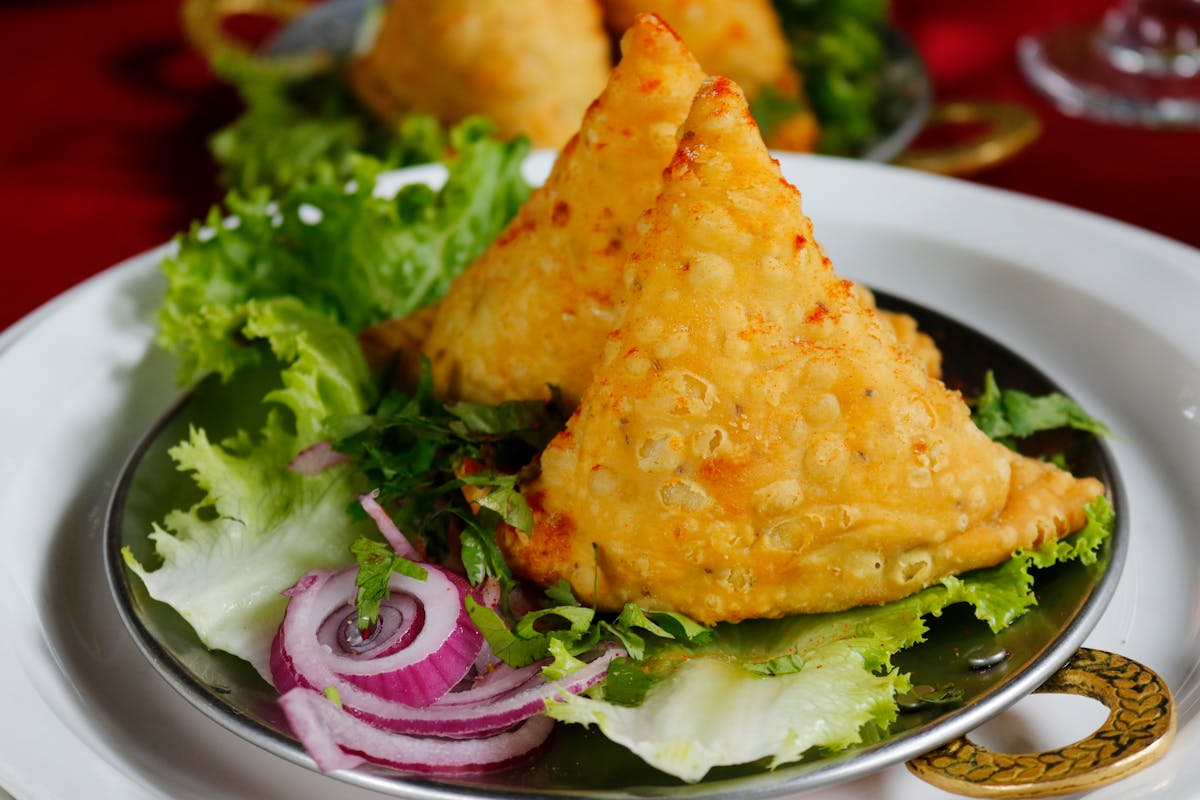
At some point on this walk, someone will hand you a cuoppo — a paper cone filled with fried things. This is the iconic Naples street food image, the one that shows up on every travel blog and Instagram reel. And it deserves the attention, mostly.
The traditional cuoppo di mare is seafood: small fried fish, calamari rings, shrimp, maybe some alghe (seaweed fritters). The cuoppo di terra is the vegetable version: fried aubergine, courgette flowers (zucchini blossoms), crocchè (potato croquettes), and sometimes arancini. Most places along Tribunali sell both, ranging from €3 to €6 depending on what's in the cone and how touristy the spot is.
Here's where I'll be honest, though. I grew up eating my grandmother's fried food in Bensonhurst, and she would've had opinions about some of these cuoppo places. Not all frying is equal. The good spots fry to order, or close to it — the oil is clean, the coating is light, and the seafood tastes like the sea. The tourist-trap spots fry in batches and let things sit under a heat lamp. You can tell by the color: golden and slightly translucent means fresh. Dark brown and greasy means it's been sitting there since the morning rush.
| Street Food | Typical Price | Where to Get It |
|---|---|---|
| Pizza a portafoglio | €1 – 1.50 | Port'Alba, Via dei Tribunali |
| Frittatina di pasta | €1.50 – 2 | Di Matteo, Fiorenzano |
| Pizza fritta | €2 – 3 | Di Matteo (Via dei Tribunali 94) |
| Cuoppo di mare | €3 – 5 | Friggitorie along Tribunali |
| Cuoppo di terra | €3 – 4 | Friggitorie along Tribunali |
| Taralli (bag) | €1 – 2 | Street stalls, bakeries |
| Babà | €1.50 – 2 | Pasticcerie on Tribunali |
| Sfogliatella riccia | €1.50 – 2.50 | Attanasio (near Stazione Centrale) |
The total damage for this walk, if you pace yourself and share a cuoppo: somewhere between €10 and €15. That's a full tour of the best fried food in the Mediterranean, and you'll still have change for a caffè.
Sfogliatella — My Grandmother Was Wrong About This Too
I need to talk about sfogliatella, because it caused a minor family argument that lasted roughly fifteen years.
There are two kinds: riccia and frolla. The riccia is the famous one — layers and layers of thin, crispy, shell-shaped pastry filled with a semolina and ricotta cream scented with candied citrus. When you bite into a good riccia, the layers shatter and flake everywhere. It's messy and brilliant. The frolla is the same filling inside a softer, shortcrust-style shell. Same taste, different texture, much less dramatic.
My grandmother insisted, with the absolute certainty that only Neapolitan grandmothers possess, that the frolla was the real sfogliatella and the riccia was "for tourists and Milanese." She was wrong. She was spectacularly, historically wrong. The riccia came first — invented by nuns at the Santa Rosa monastery on the Amalfi Coast in the 1600s, then brought to Naples in the early 1800s. The frolla is the later, easier-to-make version. But I never told her this. Some battles aren't worth winning.
Marco's take:
For sfogliatella, you want Attanasio, on Via Ferrovia near Stazione Centrale. It's a bit of a walk from the centro storico — maybe 15 minutes east — but it's where Neapolitans actually go. The riccia here comes out of the oven so hot you have to juggle it between hands, the layers shattering as the ricotta filling steams. €1.50. Get there before noon if you can — by early afternoon the good batches are gone and you're eating reheats.
If you don't want to walk to Attanasio, there are decent sfogliatelle along Tribunali itself, and any of the pasticcerie near Spaccanapoli will have them. Just look for the ones that are still warm. A cold sfogliatella riccia is a sad thing — the layers go from crispy to chewy, the filling firms up, and you lose that contrast between the crunch and the cream that makes the whole thing work.
Street food in Naples isn't a trend or a revival or a food-scene moment. It's infrastructure. It's how this city has fed itself for centuries — standing up, with greasy fingers, for less than the price of a cappuccino.
The walk from Piazza Dante through Port'Alba and down Via dei Tribunali takes about twenty minutes without stops. With stops — and you will stop, because the smell of frying oil is basically a gravitational force here — give it two hours. Three if you're the type who needs a caffè between courses, which I am.
Wear shoes you don't mind getting splashed. The streets are narrow and the Vespas don't slow down. Bring cash — most friggitorie don't take cards, or they do but with the energy of someone who'd rather you didn't ask. And don't eat a proper breakfast first. You'll need the room.
One last thing. If you find yourself standing on Via dei Tribunali at midday, holding a frittatina in one hand and a folded pizza in the other, oil running down your wrist, a scooter honking behind you, an old man yelling something in dialect from a doorway — don't panic. You're doing it right. This is exactly how you're supposed to eat here. My grandmother would approve. Probably.