Look, I know how this sounds. An Italian-American from Brooklyn writing a pizza guide to Naples. My cousins back in Bensonhurst already gave me grief about it. My grandmother — God bless her — still thinks the pizza at the place on 86th Street is better than anything in Campania. She is wrong. I love her, but she is wrong.
I moved to Rione Sanità two years ago and I eat pizza here roughly four times a week. Sometimes five. That is not a brag — it is a medical concern my doctor has raised more than once. But the thing about pizza in Naples is that it costs between four and eight euros, it takes eleven minutes from order to plate, and every single pizzeria thinks theirs is the best. Everyone has an opinion. Nobody agrees. And after two years of eating my way through this city, I can tell you with total confidence: they are all a little bit right.
What's Ahead
- What Even Is Good Pizza Here
- Da Michele — The Line Is Part of It
- Sorbillo — The Famous One on Via dei Tribunali
- Di Matteo — Fried and Folded and Perfect
- Starita — The One Your Taxi Driver Recommends
- 50 Kalò — When You Want to Sit Down Like a Person
- The One in My Neighbourhood
- How to Order Without Embarrassing Yourself
What Even Is Good Pizza Here
Before we get into specific places, you need to understand something. Neapolitan pizza is not New York pizza. It is not Roman pizza. It is not whatever they are doing in Detroit. The crust is soft in the centre — almost wet — with a puffy, charred cornicione (that's the rim) that you tear with your hands. The base blisters in a wood-fired oven at around 450°C for sixty to ninety seconds. The mozzarella is fior di latte or buffalo mozzarella, and the tomatoes are San Marzano, grown in volcanic soil on the slopes south of Vesuvius.
My grandmother's pizza recipe is wrong. I know this now. Don't tell her. She uses the oven at 220°C for twelve minutes and the crust comes out like a cracker. I ate that pizza for twenty-five years and thought it was the pinnacle. Then I ate a margherita at a place on Via Foria at eleven in the morning and my entire childhood recalibrated.
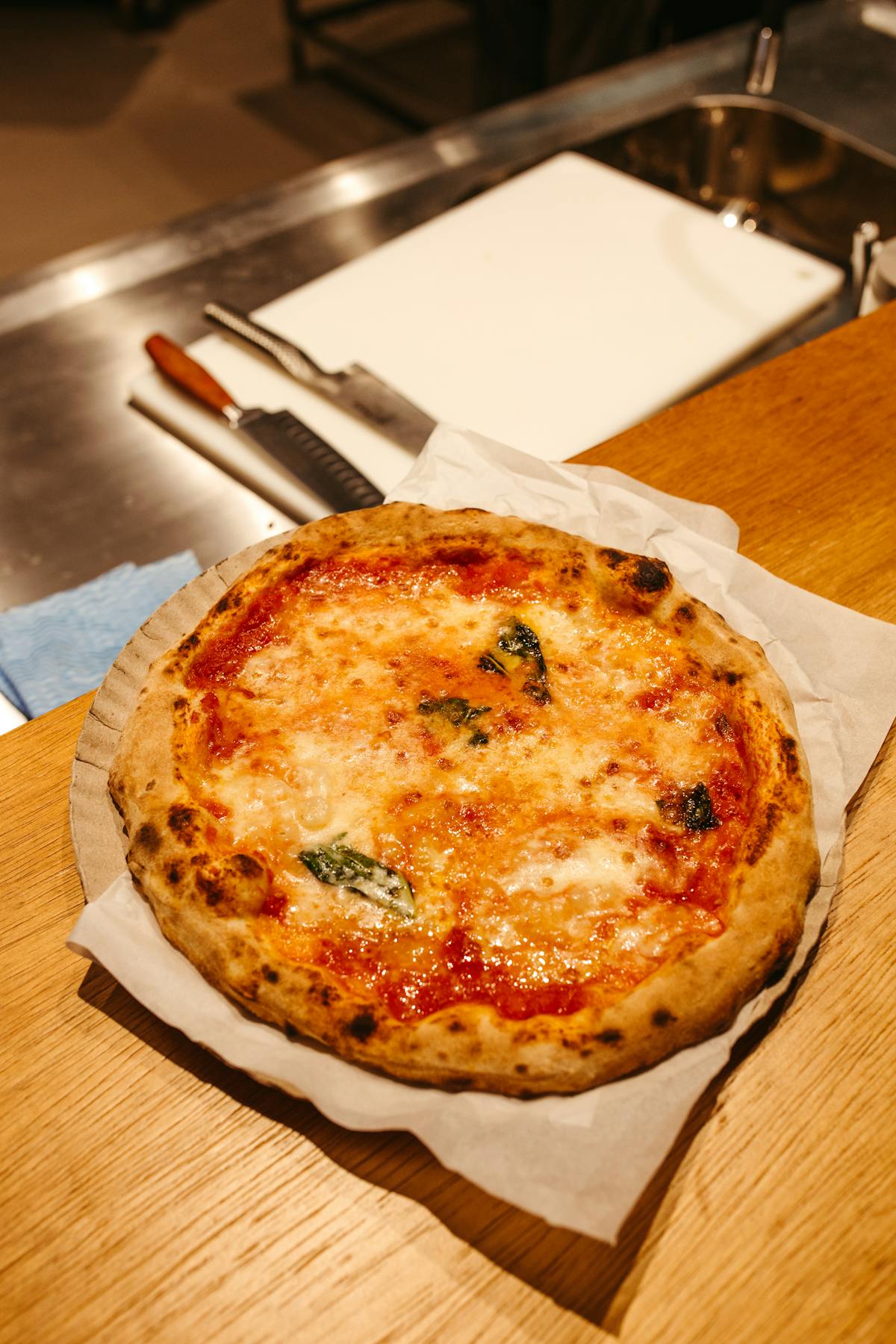
Here is the thing nobody tells you: pizza in Naples is not a meal you plan. It is something that happens to you. You are walking through the centro storico, the smell hits you from a side street, and twenty minutes later you are sitting on a plastic chair with tomato sauce on your shirt. That is the correct way to experience it.
Da Michele — The Line Is Part of It
Da Michele serves two things: margherita and marinara. That's it. You will wait in line. It will be worth it. The pizzeria has been on Via Cesare Sersale since 1870, though it got its biggest fame bump when Julia Roberts ate there in Eat Pray Love. The line got longer after that. It has not gotten shorter since.
The margherita here is almost aggressive in its simplicity. The dough has been fermented for a long time — you can taste it in the slight tang, the way the crust gives when you fold it. The tomato sauce is bright, barely cooked, more of a fresh crush than a reduction. When the mozzarella melts into it, the centre of the pizza becomes a small lake of red and white that you mop up with the cornicione.
Practical stuff: The line at Da Michele moves faster than it looks. They take a number at the door — grab yours from the little machine and wait. Weekday lunch around 12:30 is your best window. Budget 30-50 minutes of waiting on weekends. A margherita costs around €5. Cash only — or at least it was last time I went. They may have added card payment by now. Allora, bring cash anyway.
Some people say Da Michele is overrated. I understand the argument. The room is loud, the chairs are uncomfortable, the waiters move like they are slightly annoyed with you (they are). But the pizza is genuinely extraordinary. I have eaten there maybe fifteen times in two years, and it has never once been less than excellent.
Sorbillo — The Famous One on Via dei Tribunali
Gino Sorbillo is probably the most famous pizzaiolo in Naples right now. His place on Via dei Tribunali is always packed, and he has expanded to Milan, New York, Tokyo — the whole global operation. Some Neapolitans resent this. They think he has become a brand more than a pizzaiolo. I think they are being a little dramatic.
The pizza at Sorbillo is excellent. The menu is wider than Da Michele — you can get a margherita, sure, but also a cosacca (tomato, pecorino, basil, no mozzarella), or seasonal specials with friarielli and salsiccia. The dough is airy and light, with big leopard-spotted blisters on the cornicione. It is a more refined pizza than Da Michele, if that makes sense. A little more polished. Whether that is good or bad depends entirely on what you want from pizza.
Sorbillo's family has been making pizza in Naples since 1935. His father was one of twenty-one children, and something like eighteen of them became pizzaioli. I cannot verify this number exactly but multiple sources confirm it is absurdly high. That is a lot of pizza knowledge in one gene pool.
The line here is also long. The street itself — Via dei Tribunali — is one of the main arteries of the old city, and on any given evening it is a river of tourists, Vespas, and the smell of wood smoke from half a dozen pizzerias. Sorbillo is the anchor, but the whole street is worth a slow walk.
Di Matteo — Fried and Folded and Perfect
Dai, let me tell you about Di Matteo. This is also on Via dei Tribunali, a few doors down from Sorbillo. It is famous for two things: the sit-down pizza, which is very good, and the pizza fritta from the street window, which might be the single best one-euro purchase in all of southern Italy.
Pizza fritta is a folded pocket of dough stuffed with ricotta, cicoli (pork cracklings), and provola, then deep-fried until the outside is golden and shattering. You eat it standing on the sidewalk while it is still too hot, burning the roof of your mouth, oil dripping down your wrist. It is not elegant. It is one of the great eating experiences of your life.
The thing I have noticed about Di Matteo is that it draws a different crowd. Less tourist-heavy than Sorbillo or Da Michele. More old men reading Il Mattino, more construction workers on lunch break, more university students splitting a margherita and two beers. It feels like a neighbourhood place that happens to be on a famous street.
What to order: The pizza fritta from the window (€1-1.50). For sit-down, the margherita is reliable but the ripieno al forno — a baked stuffed pizza with ricotta, mozzarella, cicoli, and pepper — is the real move. Bill Clinton ate here in 1994 during the G7 summit and had the pizza fritta. They still have the photo on the wall.
Starita — The One Your Taxi Driver Recommends
Starita is in Materdei, slightly uphill from the centro storico, and it is the pizzeria that Neapolitans actually recommend to each other. It appeared in the 1954 Sophia Loren film L'oro di Napoli, which gives you a sense of how long it has been around. The current generation — the Starita family has been at this since 1901 — makes a margherita that is textbook perfect: balanced sauce, mozzarella that pulls in long strings, a crust that is chewy without being dense.
But the real reason to come to Starita is the montanara. It is a disc of dough, lightly fried, then topped with tomato sauce and mozzarella and finished in the oven. So you get the crunch of frying and the melt of baking in the same bite. It sounds excessive. It is. Boh, sometimes excess is the right call.
50 Kalò — When You Want to Sit Down Like a Person
50 Kalò is on Piazza Sannazaro, down in the Mergellina area near the waterfront. It is run by Ciro Salvo, who is one of those pizzaioli that food journalists call a "master" — and in this case they are not exaggerating. The pizza here is technically impeccable. The dough is fermented for a minimum of 24 hours (some batches longer), and the result is a crust that is impossibly light, almost creamy inside the cornicione.
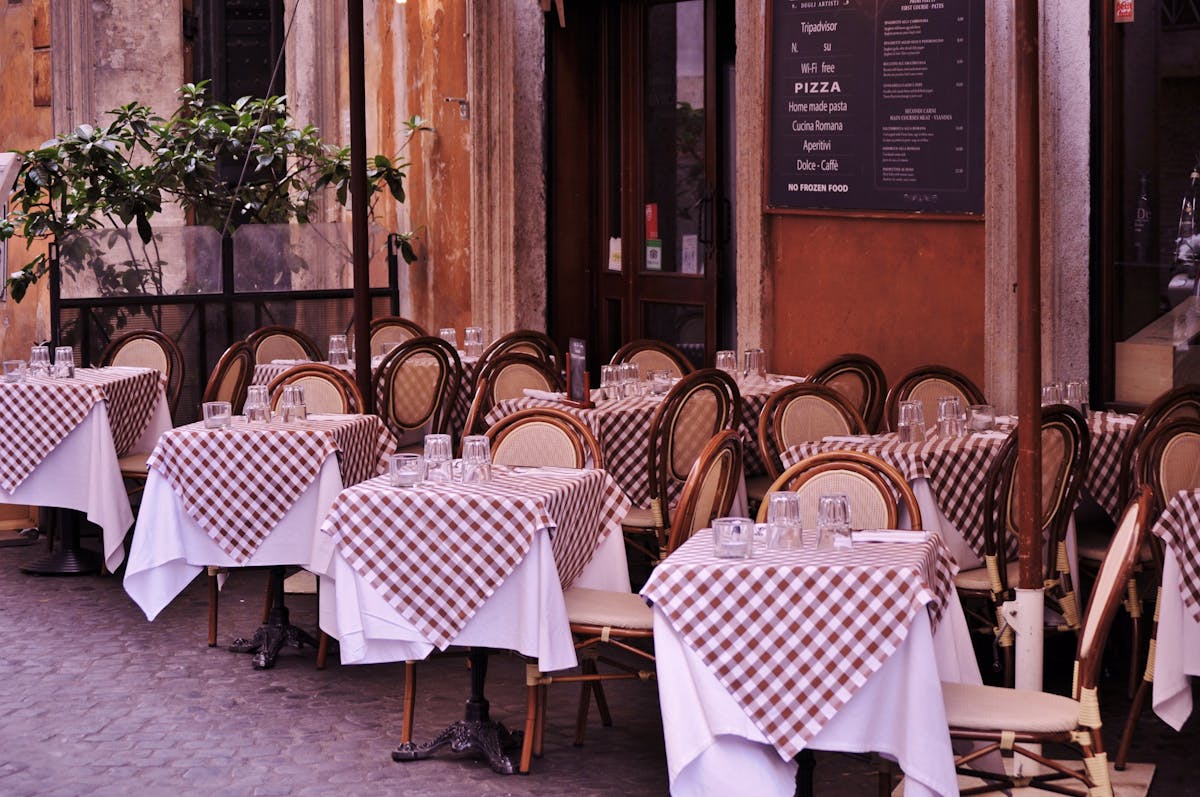
The difference with 50 Kalò is the setting. Unlike the chaotic, elbow-to-elbow experience at Via dei Tribunali places, this is a proper sit-down restaurant. You get a table. You get a menu. The waiter does not look annoyed. It is, dare I say, comfortable. Some pizza purists think this diminishes the experience. I think those people are being performative about their discomfort.
If I am taking someone to pizza for the first time in Naples — someone who has never been, who does not know the drill — I take them to 50 Kalò. It is the best introduction. The pizza is outstanding, the environment is calm enough that you can actually have a conversation, and the location near the lungomare means you can walk along the water afterwards. For the full chaotic experience, I take them to Via dei Tribunali the next day.
The One in My Neighbourhood
There is a pizzeria three blocks from my apartment in Rione Sanità. I am not going to name it. This is not because I am being precious or mysterious — it is because the guy who runs it has four tables and a wood oven barely bigger than a washing machine, and if it gets popular he will either have a breakdown or raise prices. Neither outcome benefits me.
What I will say is this: every neighbourhood in Naples has one. A place that does not appear on guidebook lists, does not have a line out the door, does not have a photo of a celebrity on the wall. The pizza is made by someone who learned from their parent, who learned from their parent. The dough has been the same recipe for decades. A margherita costs four euros. There are no reservations because there is no phone number — you just show up and if there is a table, you sit.
These places are everywhere. Walk ten minutes in any direction from the main tourist streets and you will find one. The pizza will not be worse than Da Michele or Sorbillo. It might be better. It will certainly be cheaper, and you will not stand in line for forty minutes.
The neighbourhood pizzeria near me also does a thing where if you order a beer, the owner's mother brings out a small plate of whatever she cooked that day — could be fried zucchini, could be a few slices of provola, could be nothing if she is in a mood. This is not on any menu. It just happens. Naples is full of things that just happen.
How to Order Without Embarrassing Yourself
A few things that will help you navigate pizza in Naples without looking completely lost.
First: eat it with your hands. Some people use a knife and fork for the first few bites when the centre is wet and floppy — that is fine, nobody will judge you. But eventually you fold and pick up. This is the way.
Second: do not ask for toppings that are not on the menu. This is not a Domino's. If the menu says margherita, marinara, and diavola, those are your options. Adding pepperoni (which does not mean what you think it means here — peperoni is bell peppers) is not going to happen.
Ordering vocabulary: Una margherita, per favore gets you 90% of the way. If you want buffalo mozzarella instead of fior di latte, ask for margherita con bufala — it usually costs €1-3 more. Marinara is tomato, garlic, oregano, olive oil, no cheese. Cosacca is tomato and pecorino. A portafoglio means folded into quarters — this is how Neapolitans eat pizza on the street.
Third: basta with the Instagram photos. I mean, take one if you must. But I have watched tourists spend four minutes photographing a pizza from nine different angles while it went cold and the crust turned from crispy to chewy. A Neapolitan pizza has a half-life of about six minutes. After that, the moisture from the mozzarella soaks through the base and you have lost the textural contrast that makes it special. Eat it fast. Eat it hot.
The best pizza I have had in Naples was at 11pm on a Tuesday, standing outside a place near Piazza Garibaldi whose name I cannot remember, slightly drunk, eating a folded margherita that cost three euros and fifty cents. The worst pizza I have had in Naples was at a place with a four-point-seven rating on Google, tablecloths, and a menu in four languages. Draw your own conclusions.
Allora. That is my guide, for whatever it is worth. Two years of pizza, roughly four hundred margheritas, and an increasingly concerned cardiologist. Every place I have mentioned is good. Some are great. The best one might be the one you stumble into on a side street at an hour you did not plan, because that is how Naples works — the city decides what you are going to eat and where you are going to eat it, and you are mostly just along for the ride.